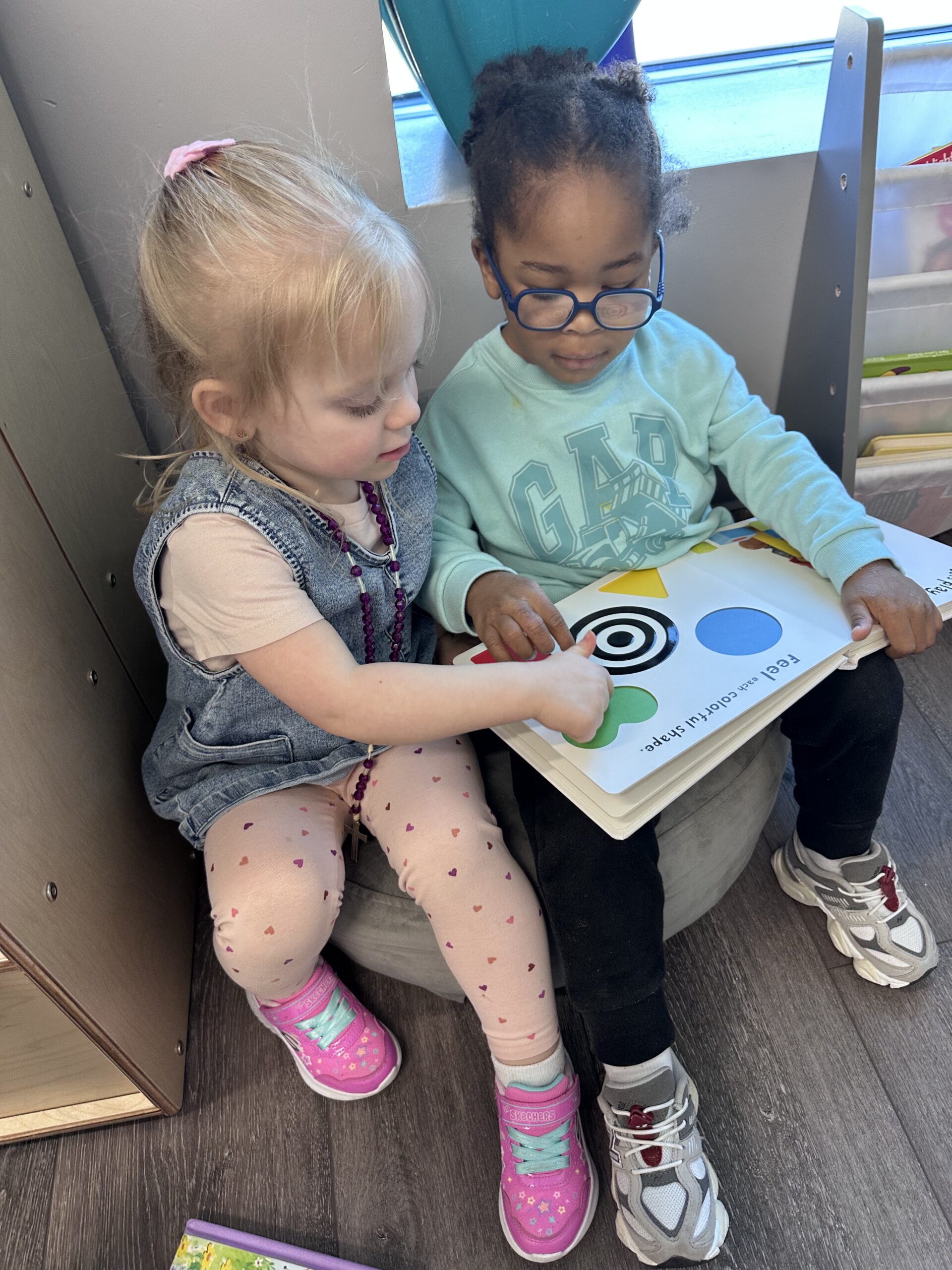
I want to paint you a picture: a group of three-year-olds gathered around a sensory bin. An additional child shows up and wants to join. Without protest or adult intervention, the kids welcome the newcomer by scooting over and making space. This might seem like a small moment to some, but it’s a gigantic leap in inclusive play for these children.
At Basal Therapies & Preschool, we get the importance of specific, contextualized therapy. It helps children grow and achieve understanding more quickly, and this improvement doesn’t just fade when playtime is over; it can last a lifetime. Inclusivity in playtime is a prime example of this. It’s a catalyst for learning vital social skills that will open up countless doors for these kids in life.
What Are Social Skills and Why Do They Matter at This Age?
So what are social skills exactly? We all have a basic understanding of them, but what about the details? What they boil down to are the tools children use to interact and communicate with those around them. In preschool, there are a few key aspects of understanding that will help with child development:
- Sharing: Things can be enjoyed together!
- Taking turns: Waiting is an important part of play.
- Empathy: Other kids have feelings, too.
- Communication: Words, gestures, and expressions are used to connect with others.
Such skills are about being polite, but there’s more to it than that. Look at the social-emotional benefits tied to these things. They’re great predictors of school readiness! According to the Centers for Disease Control and Prevention, a child with early social-emotional skills is a child better equipped to learn, form relationships, and navigate life’s challenges.
The best part about all of this is that play is a natural and effective way to build these skills. It doesn’t even feel like work to them!
What Is Inclusive Play?
This form of play revolves around creating spaces where any child can participate. This means children of all abilities, background, communication styles, and personalities are welcomed with open arms. When the barriers of difference are broken down, the kids see that they all love to play.
So what about preschool? What does inclusive play look like in that environment? It could be a child using an AAC (Augmentative and Alternative Communication) device to join a pretend grocery store or house game. It might be a sensory-sensitive child finding a spot to do collaborative art at a table designated for such things. It could look like so many things, but the crux of it is that every child has a place.
One other thing worth noting is that inclusivity in a play setting isn’t just for kids who need additional support. It benefits all children. Because, inevitably, every child will encounter someone who is different from them. When that child has an avenue for understanding, they develop empathy and communication skills that help them navigate the world around them.
The Social Benefits of Inclusive Play for Preschoolers
We can’t stress enough the profound benefits that are facilitated by this kind of play:
- Empathy and understanding are naturally developed when children are exposed to different perspectives.
- Confidence and self-expression flourish when all children feel like they belong.
- Cooperation, negotiation, and problem-solving are practiced with repetition in the context of group play, helping them become beneficial habits.
- Appreciation for diversity is established early in life.
This landmark study found that children in inclusive preschool settings demonstrated significantly stronger social competence than those in non-inclusive settings.
Inclusive Play Activities That Build Social Skills
What do inclusive play activities look like at a place like Basal? Let’s explore some of our favorites:
- Circle Games: Songs, movement games, and call-and-response activities encourage kids to take turns and listen to each other.
- Pretend Play: Kitchens, doctor’s offices, and construction sites are all places kids love to pretend to be in, and they’re building communication skills while they’re “on the job.”
- Sensory Play Stations: Tactile bins, water tables, and light boards help kids work on motor skills.
- Collaborative Art: Creating a shared mural or similar craft is a great way for kids to learn teamwork.
- Outdoor Group Play: Obstacle courses, parachute games, and the like encourage physical interaction.
We don’t limit this form of play to just preschool, either. Our Play Lab events are a great way for kids to connect through functional play!
How Parents and Educators Can Support Inclusive Play
All the activities in the previous section are what we do, but you’re probably wondering what you can do to encourage such play so your child gets maximum exposure. Here’s how the adults in a child’s life can help!
- Create a welcoming, safe environment that includes multiple learning styles with accessible materials.
- Model inclusive behavior and language in front of your children, because we all know they’re experts at mimicking the things they see!
- Gently guide conflict resolution if (when) disagreements happen. Instead of fixing the issue by yourself, coach them through it. “How would you have felt if someone took your toy away?”
- Celebrate differences and encourage curiosity. When your child asks you why somebody does something differently, use it as an opportunity to teach them that everyone is different and deserves to be included.
Signs Your Preschooler Is Developing Strong Social Skills Through Play
It’s natural to second guess yourself. Am I doing enough to teach my child? Am I going about it the right way? If you aren’t sure whether your efforts are making an impression on your child, keep an eye out for encouraging signs. If they start initiating play, sharing and turn-taking, showing empathy and expressing their feelings in a non-aggressive way, your efforts to teach them are paying off.
It’s important to recognize that this whole process takes time. The milestones don’t all happen at once, and they look different for every child. However, each milestone is a meaningful step in the right direction. Don’t get discouraged!
Every Child Deserves a Place in the Circle
Inclusive play is way more than just a buzzword; it’s a great philosophy to follow that allows children to learn about the world in a healthy way. On top of that, it allows them to learn about themselves! When preschoolers spend time playing together despite their differences, they learn to communicate and empathize with one another.
At Basal Therapies & Preschool, our preschool program is built around this very foundation. Our pediatric therapists and teachers have immense passion for creating environments where every child can connect and become the best version of themselves! If you want your child to grow in an inclusive, supportive environment, enrollment is open! And if you have more questions, we’re happy to answer them for you.
Get in touch!
If you think your child could benefit from our support and services, send us a message!