The fall progress report comes home in your child’s backpack. You skim past the greeting and come to this: Will produce /s/ in the initial position of words with 80% accuracy given minimal cues. You read the sentence again. Maybe once more, to no avail. Is 80% good? What’s a minimal cue? And most importantly, now what do I do? Like with any profession, speech-language pathology has its jargon, its technical language. As such, speech therapy goals are written in a way that makes sense to practitioners and almost no one else.
It’s okay to need some guidance, and that’s what we’re here for today. Below, we’ll cover how to read a goal, what the common types mean, how long speech therapy tends to take, and easy ways to help out your child at home.
What Are Speech Therapy Goals?
First the facts. Speech therapy goals are specific, measurable targets a speech-language pathologist sets for a child after an evaluation. Each goal names a communication skill, how much help the child gets while practicing it, and the accuracy that shows the skill is solid. Together, they map out where your child currently is and where their therapy is headed.
A pediatric speech-language pathologist writes them based on your child’s current skills and needs, as well as your family’s priorities. (If you’d love for your child to order their own pancakes at a restaurant, say so.) Here’s an easy way to think about it:
- Long-term goals are the big picture, like being understood by strangers.
- Short-term goals are the steps that get there, like saying “s” at the start of words.
How to Read a Speech Therapy Goal
Back to that line from the report that flummoxed you (understandably). Most goals have four parts.
- The skill: What your child will do. In this example, it’s saying “s.”
- The conditions: Where and how they’ll practice. “Initial position” means the start of a word, as in sun or soap.
- The level of support: How much help they get. “Minimal cues” means a small nudge now and then.
- The target: 80% accuracy, by a date set in your child’s plan.
SMART goals for speech therapy are Specific (one sound, one spot), Measurable (80%), Achievable (a manageable step), Relevant (“s” is in see, stop, and school), and Time-bound (that target date).
In real life, 80% translates to about eight correct tries out of ten. It isn’t 100% because nobody nails every sound every time (including adults who are tired or talking fast). At 80%, the skill is reliable enough to build on.
Cues are the help your child gets along the way, and they usually fade over time:
- A model: The therapist says the word first, and your child repeats it
- A visual cue: Pointing to their lips or showing a picture of where the tongue goes
- A verbal reminder: Something quick, like “Use your snake sound!”
- Independently: No help at all
If a report shows the same accuracy with fewer cues, that indicates progress, too! Your child is doing more of the work on their own.
Expressive vs. Receptive Language Goals
Expressive language is what your child says or communicates. Receptive language is what they understand.
- Expressive goals might include using two-word phrases to ask for things (“more juice”) or retelling a short story in order.
- Receptive goals might include following two-step directions (“Get your shoes and sit down”) or answering simple who, what, and where questions.
Talking through bath time builds expressive language, and pausing mid-story to ask “Who’s hiding behind the tree?” works on understanding.
Being stronger in one area is common; we experience this as adults. Many kids understand far more than they can say, which is why the expressive vs. receptive language split should be taken into account.
Other Common Goal Types for Kids
Articulation Goals
These target specific speech sounds, like our “s” example. Our speech sound development guide shows which sounds are typical at each age.
Example goal: Will produce “k” at the end of words with 80% accuracy given a visual cue.
At home: Make sounds together in a mirror, or try a few picture cards with the target sound.
Social Communication (Pragmatic) Goals
Pragmatic goals cover taking turns, greetings, and staying on topic. They often show up for autistic children.
Example goal: Will take three turns in a conversation with a peer, given one reminder.
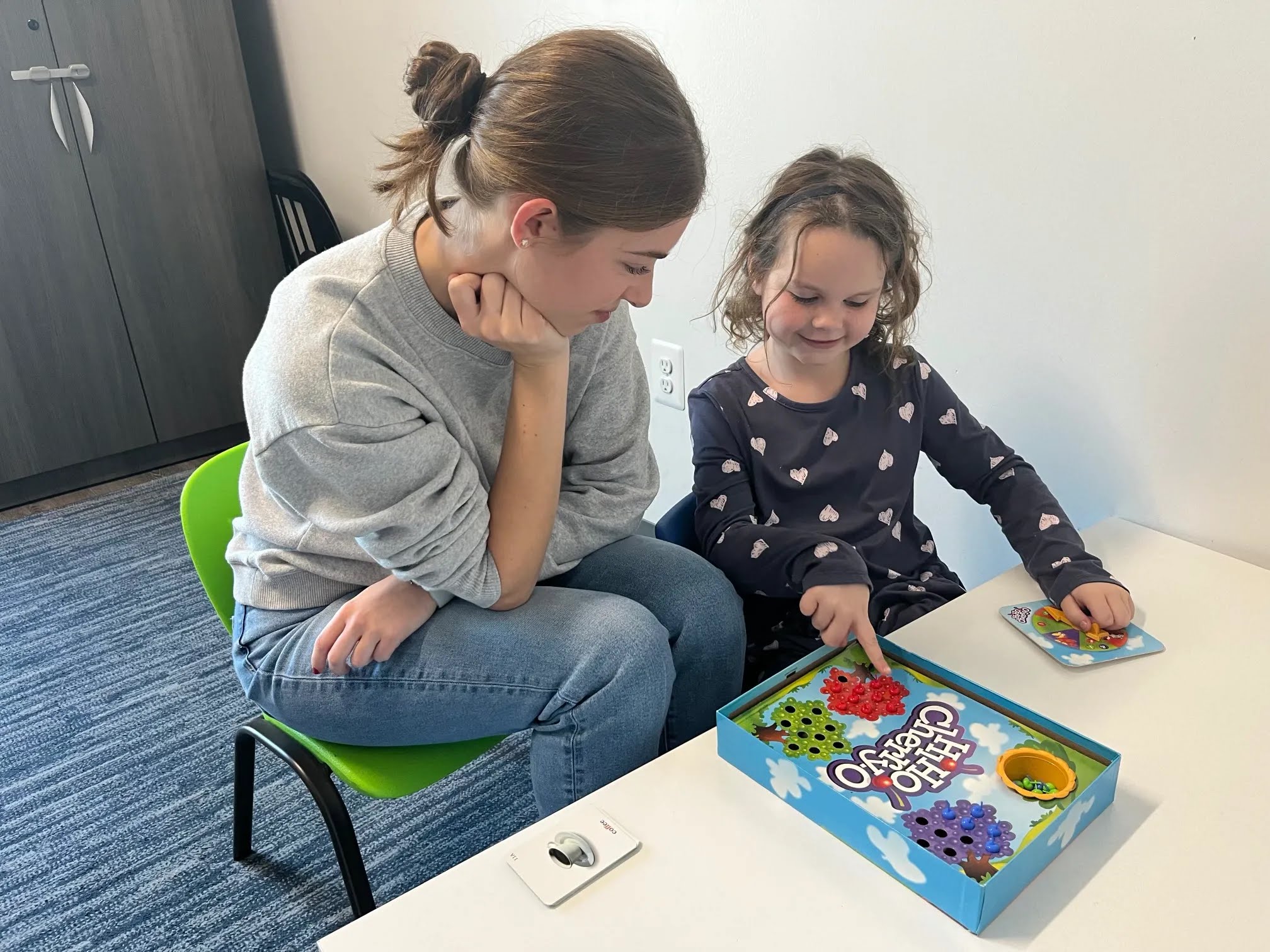
At home: Board games are built-in turn-taking practice. Find more ideas for building social skills through inclusive play.
Fluency Goals
Fluency goals support smoother speech for kids who stutter. The aim isn’t perfect speech. It’s helping your child feel confident talking, using strategies their therapist teaches. Stuttering can also vary from day to day, so a rough week doesn’t mean therapy isn’t working.
Example goal: Will use a learned smooth-speech strategy in a short conversation, given one reminder.
At home: Slow your own pace and give your child time to finish. As tempting as it is, don’t finish their sentences.
AAC Goals
AAC (augmentative and alternative communication) goals help children communicate with a speech device, picture board, or signs. Many parents worry AAC will slow down talking, but that’s one of the most common misconceptions we hear. AAC gives your child a way to communicate now while other skills keep growing. Here’s more on why AAC matters.
Example goal: Will use a device to request a favorite snack, given a model.
At home: Keep the device within reach all day, and use it yourself when you talk to your child. Our AAC consultation team can help you get set up.
How to Support Your Child’s Speech Therapy Goals at Home
The good news is, you don’t need a lesson plan, and your role is important (here’s why parent involvement matters). Well-written SMART goals for speech therapy help, because you know what to listen for.
- Keep it short. Five minutes in the car beats a long session that ends in tears.
- Pick one or two goals. Working on everything at once wears everyone out.
- Ask what to practice this week. Your child’s therapist knows which goal is ready for home.
- Celebrate small wins. A new sound used once at dinner deserves a high five.
Songs are an easy place to start. Repetitive songs let your child chime in on the parts they know, with zero pressure. That’s Activity 5 in our 7 speech therapy activities to encourage at home.
How Long Does Speech Therapy Take?
“How long does speech therapy take?” is one of the first questions parents ask us. There’s no single answer, but these factors shape the timeline:
- The type and severity of your child’s needs
- How often sessions happen
- How much practice happens at home
- Your child’s age
- Co-occurring conditions, such as autism or apraxia
Progress isn’t one big finish line. Goals are reviewed and updated regularly, so meeting one means moving to the next. Signs of progress to watch for include:
- Friends and family understand your child more often
- They try new words or longer sentences on their own
- They need fewer reminders and seem less frustrated
Every child’s path is different. Working on one or two sounds often is different from building language skills or working through apraxia. Some kids also take a break from therapy and come back later as new goals come up.
If you’re ever unsure where things stand, ask your child’s therapist: Which goals are close? What’s next? What should we practice at home?
How Basal Therapies Sets and Supports Speech Therapy Goals
At Basal, your child starts with a comprehensive evaluation so we understand what’s causing the difficulty. Then we set goals with you, built around your child’s interests and daily life. Sessions are play-based (kids work harder when they’re having fun), and our therapists walk you through strategies to use at home between visits.
Our Frederick, MD team treats articulation, voice, fluency, expressive language, and receptive language. Occupational therapy, feeding therapy, and AAC support are all under one roof. We accept Medicaid, Cigna, TRICARE Prime, and UnitedHealthcare.
Here’s more on our pediatric speech therapy services in Frederick, MD.
Questions About Your Child’s Goals?
You’re part of the team that gets your child to their goals. Small daily practice adds up, so pick one of our at-home speech therapy activities to try this week!
Still puzzling over a line in your child’s report? We’re happy to talk it through or set up an evaluation. Schedule an appointment or call us at 443-776-0271.
Get in touch!
If you think your child could benefit from our support and services, send us a message!